


How Online Jackpot Systems Work: Randomness, Probability, And Game Design
How Online Jackpot Systems Work: Randomness, Probability, And Game Design

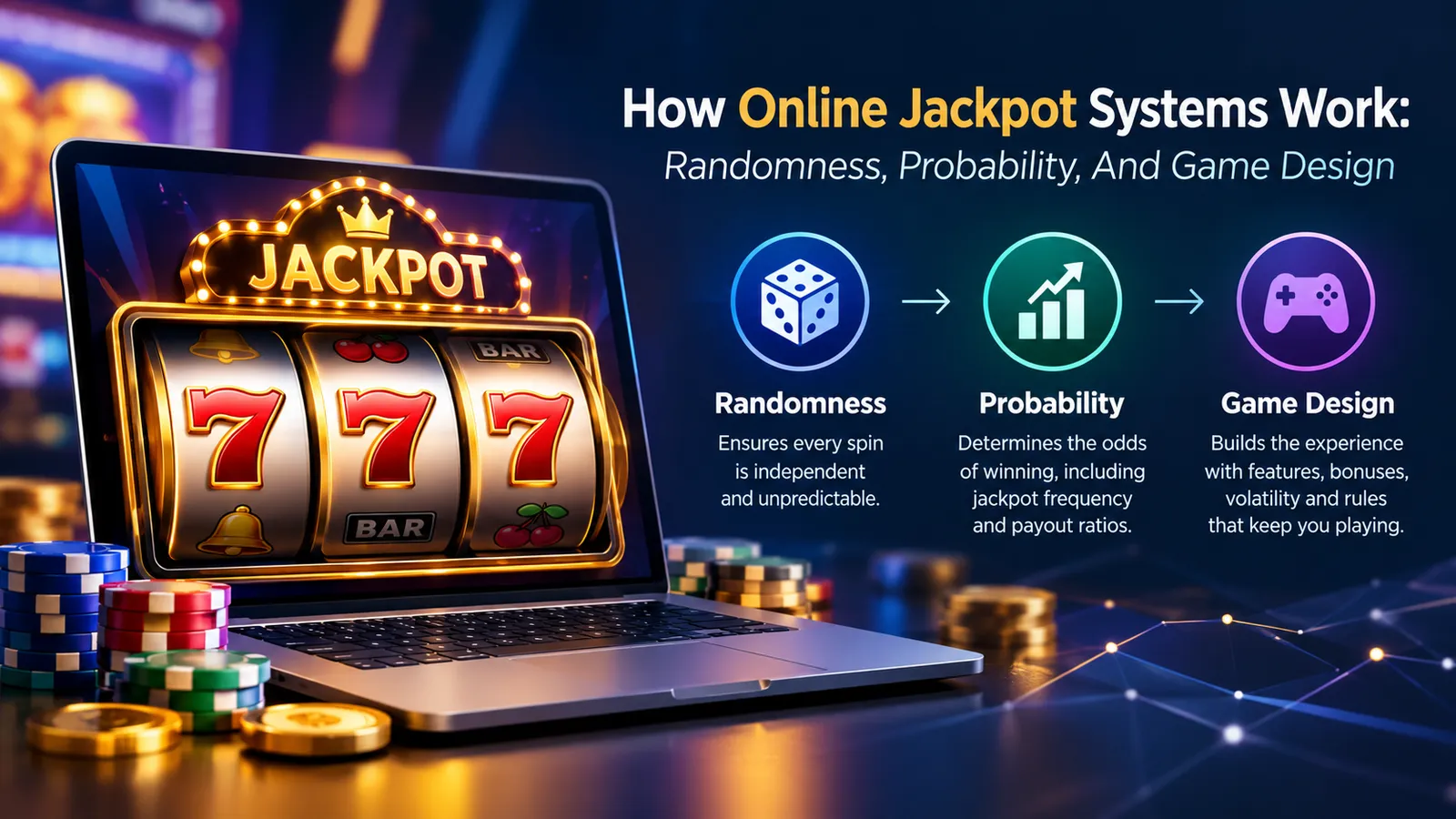
Online jackpot games use software to produce results and track prize values. Behind the bright graphics and moving symbols, mathematical rules determine how each game works.
A jackpot is a prize linked to a specific outcome or set of conditions. Some games offer a fixed amount. Others use a prize pool that changes over time.
The most important part of these systems is randomness. Digital games often use random number generators, or RNGs, to select results from a defined set of possible outcomes.
However, random does not mean that every result has the same chance of occurring. Game designers can assign different probabilities to different outcomes.
This distinction helps explain why large prizes may appear rarely, even when a game produces thousands of results.
Probability, software design, and payout rules work together to determine how a jackpot system operates.
Understanding these elements makes it easier to separate the mathematics behind a game from its visual effects.
A spinning reel or flashing prize counter may create suspense, but the underlying software determines the result according to the game’s programmed rules.
How Random Number Generators Determine Game Outcomes
A random number generator (RNG) produces values that game software uses to select outcomes. In most digital casino games, the system relies on a mathematical algorithm rather than physical dice or spinning wheels.
The software links each possible result to a range of numbers. When the RNG produces a value, the game uses that value to identify the outcome.
This process takes place behind the screen. The spinning reels, flashing lights, and sound effects display the result but do not usually determine it.
Live dealer games work differently. In formats sometimes described as desi play live casino games, cameras show physical equipment and human dealers. The outcome may come from real cards or a roulette wheel rather than a software RNG.
Both formats need clear rules, but they use different methods to produce results.
A properly designed RNG must also resist predictable patterns. Independent testing can assess whether its output meets the required statistical standards.
Randomness does not guarantee equal odds. A game can use a reliable RNG while assigning some outcomes much lower probabilities than others.
The RNG selects from the available outcomes. The game’s mathematical model determines how likely each outcome is.
How Probability Determines Jackpot Frequency
Probability measures how likely an event is to occur. Jackpot games use it to define the chance of each possible result.
Consider a simple example. A game has 1,000 equally likely outcomes, but only one awards a jackpot. The chance of that result is 1 in 1,000, or 0.1%.
Real games may use far more complex rules. Different symbols, combinations, and bonus events can have different probabilities.
A rare outcome does not become more likely just because it has not appeared for a long time.
This principle is called independence. When game results are independent, earlier outcomes do not change the probability of the next one.
For example, flipping a fair coin five times and getting heads each time does not increase the chance of tails on the sixth flip. It remains 50%.
The same principle applies to independent jackpot events.
A prize can remain unawarded through many rounds without the next result becoming more predictable.
Long-term probability describes patterns across many outcomes, not the result of one event. This distinction is essential for understanding how jackpot mathematics works.
How Fixed And Progressive Jackpots Differ
Online jackpot systems generally use two main prize structures: fixed jackpots and progressive jackpots.
A fixed jackpot has a set prize value. The amount stays the same unless the game operator changes its rules. The game awards that prize when a qualifying outcome occurs.
A progressive jackpot works differently. Its prize pool grows as the system adds funds under predefined rules.
Some progressive systems connect several games to one shared prize pool. Others track a jackpot within a single game.
The displayed total shows the current prize value, but it does not explain the probability of winning.
A larger jackpot does not automatically mean a higher chance of winning. The probability depends on the game’s rules and the conditions that trigger the prize.
After a progressive jackpot is awarded, the prize pool usually returns to a preset starting value.
These systems show how game designers can separate prize size from outcome probability. Both affect the game’s mathematical structure, but they measure different things.
How Game Design Shapes Jackpot Presentation
Game designers use graphics, sound, and motion to show what happens during a jackpot event.
A prize counter may grow on screen. Symbols may flash, and music may change as the game reveals a result.
These effects create visual feedback, but they do not necessarily affect the underlying mathematics.
For example, a slot game may show two matching jackpot symbols before the final reel stops. This creates the appearance of a near win.
However, a near miss is still a losing outcome. It does not show that the next result will be more likely to produce a jackpot.
Designers also use payout tables to explain which outcomes award prizes. These tables form part of the game’s rules and help distinguish actual prize conditions from decorative effects.
Another key measure is return to player (RTP). It describes the theoretical share of wagers a game returns across a very large number of rounds.
RTP does not predict what will happen during a short session.
Good technical analysis separates three elements: the result the software produces, the prize rules it applies, and the animation it displays.
Why Understanding Jackpot Mathematics Matters
Online jackpot systems combine random number generation, probability, prize structures, and visual design.
Each element serves a different purpose. The RNG selects outcomes, while probability rules determine how often those outcomes can occur. Jackpot structures define prize values, and graphics present the results.
A large prize counter does not change the odds. A long series of losses does not make a jackpot more likely when outcomes are independent.
Likewise, animations and near misses do not reveal what the next result will be.
Independent testing can help assess whether game software follows its stated rules, though it cannot guarantee any individual outcome.
The central lesson is simple: jackpot size, winning probability, and visual presentation are separate features.
Understanding these differences provides a clearer picture of how digital jackpot games function and why their results remain uncertain.